Benu Misra Archives

The art and legacy of Benu Misra

Explore selected works, exhibitions and archival records documenting the life and practice of Assamese artist Benu Misra (1939–2019). The archive will continue to develop as materials are catalogued and verified.

1939–2019
Artist from Assam
1957
Scholarship to Santiniketan
1976
Founding president, Gauhati Artists’ Guild
Placeholder for a rights-cleared artwork image or approved portrait of Benu Misra
Benu Misra 1939–2019 | Artist from Assam
Hero: one strong rights-cleared artwork image or approved portrait

About the archive

A growing digital record

Benu Misra Archives is a growing digital record of the artist’s work and legacy. It brings together artworks, biographical information, exhibitions, publications and related documentation in one place. Each record is presented with the available details, with the aim of supporting discovery, research and a deeper understanding of Misra’s contribution to modern art in Assam and Northeast India.

About the collection

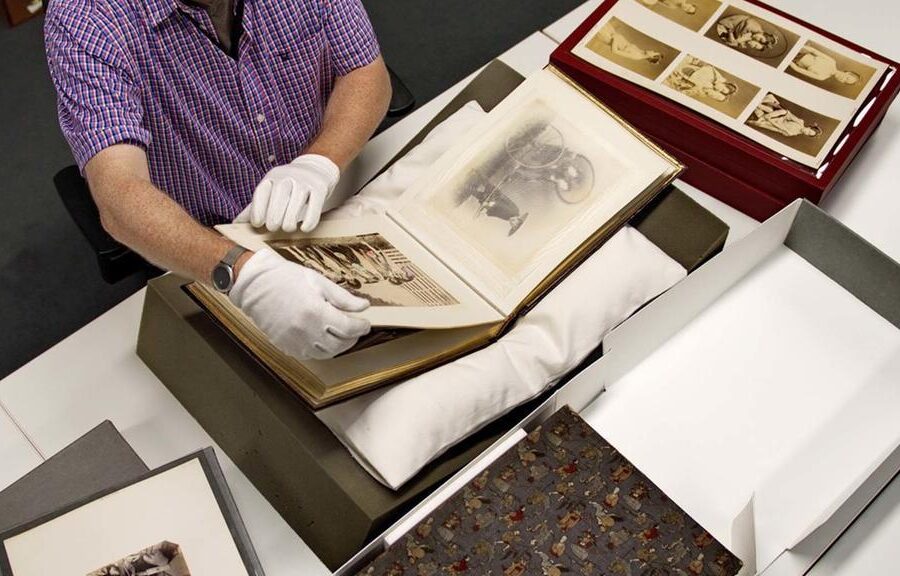
The archive brings together selected artworks, biographical information and related documentation to support research into Benu Misra’s life and practice.

Artworks

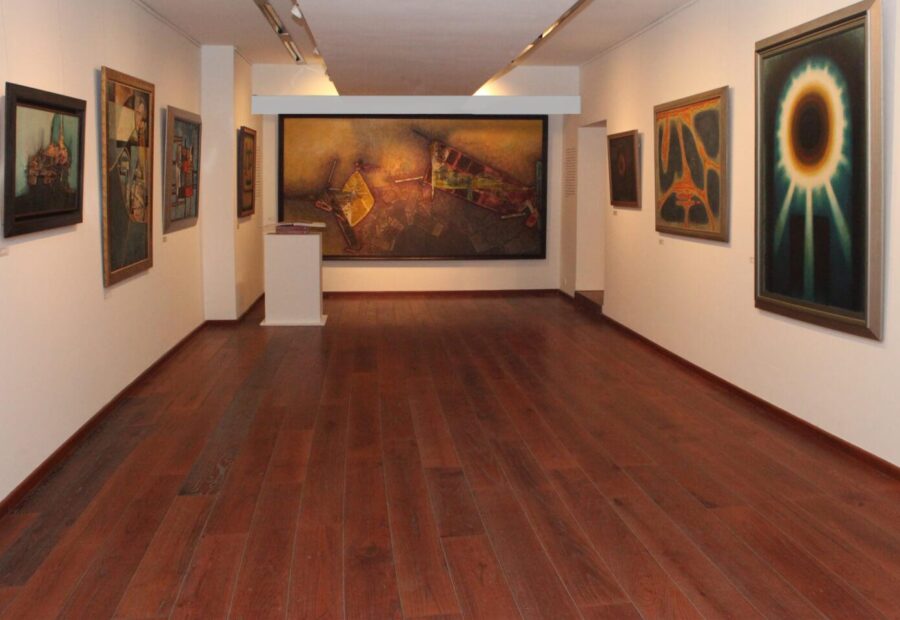
Explore selected artwork records and the information available for each work.

Exhibitions & records

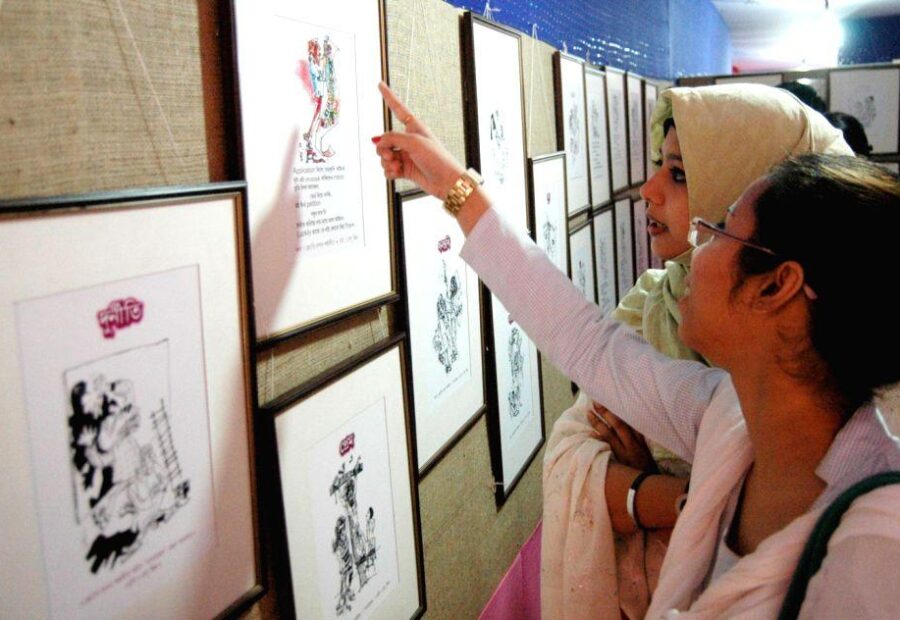
Discover documented exhibitions, publications, press coverage and related archival material.

Provenance & rights

Review available source, credit and rights information for individual archive records.

1939–2019 | Artist from Assam

About Benu Misra

Biographical information drawn from available public reporting and archive records.

Extended biography

Early life and education

Benu Mishra (27 November 1939 – 29 May 2019) was an artist from Assam whose work encompassed painting, sculpture and graphic design. He was born in Barpeta and moved to Guwahati with his family in 1946. After completing his schooling in Guwahati, he received a state government scholarship in 1957 to study at Santiniketan. He completed a four-year Diploma in Fine Arts and Crafts in 1961.

Career and public work

In 1962, Mishra joined Janasanyog, Assam, as an artist. He briefly worked as an art teacher in Bombay in 1963, and held his first solo exhibition in Kathmandu in 1964. In 1973, he joined the Government Art and Craft School. In 1976, he became the founding president of the Gauhati Artists’ Guild, a role he held until 1989.

Works, awards and recognition

Public accounts identify paintings including Death, The Chair, A Hot News, The Last Supper and Rain over the Brick Field among his recognised works. His awards included the Pranab Baruah Award in 2003 and the Bishnu Prasad Rabha Award in 2006. In 2010, a retrospective titled Benu Mishra: The Colourful Mosaic was held at Srimanta Sankardeva Kalakshetra in Guwahati. Mishra died in Guwahati in May 2019 at the age of 80.

Legacy and retrospectives

A 2026 retrospective, Between Riverlight and Red Soil, was presented at Nandan Art Gallery, Kala Bhavana, Visva-Bharati. Reporting on the exhibition described a range of paintings, sculptures, graphic designs and archival material, and highlighted connections between Santiniketan and Assam in discussions of Mishra’s practice. The exhibition also brought attention to his Death Series, book-cover design and public sculpture.

2003

Pranab Baruah Award

2006

Bishnu Prasad Rabha Award

2015

Chatok Award

Archive / Timeline

A life in art

Selected milestones in Benu Misra’s life and artistic career.

  1. 1939

    Born on 27th November in Palangdihati, Barpeta. Father Jogendranath Misra and mother Bhagyeshwari Devi.

  2. 1945

    Shifted to Guwahati and settled along with his family and then completed his primary education in Chenikuthi primary school. Simultaneously, he started learning drawing and painting at Guwahati Art School.

  3. 1957

    He passed his matriculation from Cotton Collegiate School and received a scholarship of eighty rupees from Assam Government and got admission in Kala Bhavan of Santiniketan.

  4. 1961

    He passed the four year diploma in 'Fine Arts and Craft' from Kala Bhavan, Santiniketan with distinction and gold medal.

  5. 1962

    He joined as an Artist in Public Relation Department of Government of Assam and thus, began his service life. In the same year, he rendered his service at Sir Jacob Sasoon School in Bombay for some time as an Art teacher.

  6. 1963

    He rejoined in Public Relations Department.

  7. 1964

    The first solo exhibition of his life was held in Kathmandu of Nepal.

  8. 1973

    Attended the 10th World Youth Festival held in Berlin, East Germany. He received fellowships from the Central Government, Art and Cultural department. He married Rajalkhimi Bhattacharyya daughter of Rajen Bhattacharyya.

  9. 1976

    Established Gauhati Artists Guild and dedicated himself for upliftment of art and culture as the founder president of Guild.

  10. 1989

    Completed his masterpiece painting work "Death". Some of the most notable paintings of that time are "The Last Supper", "The Hot News". Some of his worth-mentioning paintings include "The Chair", "Father and Son", "Panicky", "Village Band", "Blue Moon", "Rain over the brick field", "City scape" among others. He designed over ten thousand book covers and illustrations in his life time.

  11. 1993

    Held his second solo exhibition in Guwahati. Conducted a national level painting and illustration workshop organized by the National Book Trust. More than ten thousand graphic designs completed. Felicitated for national level graphic design.

  12. 1994

    He become the Art Editor of bilingual poetry magazine "Kabita".

  13. 2000

    Retired as Senior Exhibition Officer of the department of Public Relations, Govt. of Assam. After retirement he established himself as an accomplished sculptor. Some of his works such as statues, illustrations relief murals in mediums like glass fibre, bronze, etc. They in particular be seen in Demoria college campus, Gahpur, Numaligarh Refinery campus, Dhakuakhana, Gauhati University campus, Safrai, etc. In the same year, completed the work on construction of a pair of bronze statue of Kanaklata and Mukunda Kakati in Gahpur. This sort of bronze casting was done for the first time in Assam.

  14. 2002

    Constructed a complete statue of Mahatma Gandhi at Dhakuakhana in Lakhimpur district. Around the same time, he installed a large statue named "Ecstasy" in the administrative building of Numaligarh Refinery.

  15. 2003

    Received Pranab Baruah Award and constructed a full statue of martyr memorial in Demoria college.

  16. 2004

    Became an honorary Art Secretary of a monthly magazine "Kotha Guwahati".

  17. 2006

    Honoured with Bishnu Rabha Award by government of Assam.

  18. 2008

    Set up complete statues of five martyrs in Demoria college near Guwahati.

  19. 2009

    He installed the statue of Hem Barua at the entrance of Numaligarh Refinery.

  20. 2010

    Joined ten day painting workshop with Artists from neighboring country Bangladesh. Received Tarun Duara Memorial Oil India 2010 Award.

  21. 2011

    Month long Art exhibition titled "Benu Misra in Retrospect" was conducted.

  22. 2012

    Full-length statue of Birendra Kumar Bhattacharya was installed by him in Safrai, birth place of Birendra Kumar Bhattacharya.

  23. 2013

    Constructed a Bronze statue of Laksminath Bezbarua in Gauhati University campus.

  24. 2014

    Constructed a Bronze statue of Krishnakanta Handique in Gauhati University campus.

  25. 2015

    Successfully conducted a colourful drawing exhibition with more than hundred drawings for children with various poems of Hiren Bhattacharya, Birendra Nath Dutta and Jyoti Prasad Saikia in different places of Assam.

  26. 2016

    Received the "The Telegraph Axom Shrestra Awards, 2016", jointly presented by the Telegraph paper and Oil India. In the same year, received "Jibon Silpi Adya Sarmah Award".

  27. 2017

    Established an Art Gallery named "Gallery Benu Misra" in his own residential premises at Narakasur, Guwahati. In the same year received "Achievers Award, 2017" of the Sadin-Pratidin group which was conferred by Shri Venkaiah Naidu, former Vice President of India.

  28. 2019

    As on 29th May, 2019 Benu Misra passed away in his own residence at Narakasur, Guwahati and he was cremated with state honour.

Works

Explore the works

Explore selected records of Benu Misra’s works. Each entry presents the details currently available for that work.

Public reporting mentions Death, The Chair, A Hot News, The Last Supper and Rain over the Brick Field. These are starting points for asking the client for records, not a final authoritative checklist. Confirm title spelling, date, medium, dimensions and image rights before publishing. [S4]

Exhibitions

Exhibitions

This section brings together documented exhibitions connected with Benu Misra’s work.

2010

Benu Mishra: The Colourful Mosaic

Srimanta Sankardeva Kalakshetra, Guwahati

Retrospective exhibition held at Srimanta Sankardeva Kalakshetra, Guwahati, in 2010.

2026

Between Riverlight and Red Soil: A Retrospective of Benu Misra

Nandan Art Gallery, Kala Bhavana, Visva-Bharati

Retrospective reported at Nandan Art Gallery, Kala Bhavana, Visva-Bharati, in March 2026.

Exhibition record fields

  • Title
  • Start date
  • End date
  • Venue
  • City/region
  • Exhibition type
  • Organiser
  • Curator
  • Description
  • Catalogue/PDF
  • Installation images
  • Source references
  • Image credits and permissions

Publications

Selected books and exhibition catalogues connected with Benu Misra and his artistic career.

Selected references

  • Benu Misra: Portrait of a Painter, edited by Deepali Bhattacharya Barua (Guwahati: Bhabani, 2007), referenced in Tezpur University profile material.
  • Benu Mishra: The Colourful Mosaic, 2010 retrospective catalogue lead referenced in Tezpur University profile material.

Full bibliographic records, cover images and copyright permission remain to be obtained. [S6]

Collections

Institutional reference

The official Assam State Museum website lists Bodo Weavers by Benu Misra among works in the museum’s Painting Gallery. The listing provides an institutional reference to the work.

Galleries of Assam State Museum

Writings & Reminiscences

Selected writings offering critical and personal perspectives on Benu Misra's artistic practice, influences and life.

A Critical Perspective on Benu Misra By Pradip Acharya Art Criticism A critical reflection on Benu Misra's artistic process, influences, social commitment and work across different media.

Benu Misra emphasizes and exemplifies the imperatives of going through a process till the created image become a visceral process, individually intuited but informed throughout by a concern for the community. Painting bill-boards from precarious bamboo scaffoldings to learning the intricacies of printing to the incorporation of painting with various other media spell out his continuing journey-work. Goethe had advocated a world-literature while Tagore visualized the universal man. It was at Tagore’s Shanti Nikeatan that he met and came under the spell of his teacher and mentor Ramkinkar Baij and the other impassioned teacher Binode Behari Mukhopadhyay. The miniature manuscript paintings of his native Assamese, the wooden sculptures in the community prayer halls of his childhood and the paintings and sculptures of the masters together peopled his widening horizon. Goya, Van Gogh, and Manet were internalized and made his own but it was Ramkinkar Baij who enriched his commitment to the community and his rootedness. Misra was always with the suffering and the oppressed, see the details in ‘The lottery-ticket seller’, for instance. ‘Death’ had the Assam agitation as the temporal context but it highlights the human aspect not the political. His themes and social awareness inevitably brought in pastiche and irony as we find in his ‘the Last Supper’ while “the Chair’ reveals Misra’s nagging awareness of the essential sadness of the human predicament. Misra ranged over different media from murals to sculpture to book covers and designs. It is in the sculptures, that he had devoted himself to later in life, that the all-importance of context comes to the fore. It is intriguing to consider and dwell on his partiality to cover design and we have god’s plenty here. A significantly gifted painter does not use a medium only to represent but begins to exploit the media for their own ends till the created visual becomes a component of the world like a tree or a river. Besides cover designs were a decidedly social and promotional enterprise where the individual talent is dedicated expressly to the service of the community. This is not an explanation but, given the context and the perspective, it definitely is a fresh way of addressing the plenitude of such creations in Misra’s oeuvre.

– Pradip Acharya

A Personal Reminiscence of Benu Misra By A. Ramachandran Personal Recollection A personal account of friendship, student life and shared experiences with Benu Misra during their years at Santiniketan.

My friendship with Benu Misra way back from 1958 to 1962 is like a flower pressed within the pages of memory. The shape and contour have remained the same but lack of contact with each other for so many years has taken away the freshness of colour and fragrance. From such a remote memory to recreate the tenderness of our relationship is still possible. But it is extremely difficult for me to evaluate the work he has done in the long period of our lives isolated from each other. I fell very touched that Benu still has the same warmth and affection which we had for each other during our stay in Santiniketan even though it is difficult to tally his present photograph Pencil Drawing of Benu Misra made by A. Ramachandran in the year 1962 at Santiniketan with the slender handsome youth I knew. I am sure he will have same reaction if he sees me today.

Benu was an extremely gifted person when I knew him. Infect all the students and staff of Kala-Bhavana looked at him with admiration for his gift both in painting and music. Since I used to sing classical music and Benu was extremely good at playing tabla we became great friends from the very beginning. Another strange thing was that the drawing and studies we made were so similar that we could work for each other when even needed. The other advantage of our being talented was that we could help other mediocre students doing their work for a price-mostely a treat at the railway restaurant which many friends found cheaper than failing in the examinations. We both were not disciplined students and we liked to spend our time sitting in tea shops rather than attending classes. We talked about art music and at times confided each other about our love affairs.

I still have a drawing which I sketched while he was reading. ‘Lust for Life’, the romantic story of Van Gogh which deeply moved us during our student days. Benu seems to have retained that romantic notice of artist struggling forever against the society and the world. No wonder he could refuse the offer of Virendra Kumar Gallery to come and practice as a professional artist in the capital. I definitely agree that ones own place should be the first choice provided that environment is conducive for growth and development of a practicing artist. I accepted Virendra Kumar’s invitation and settled in Delhi knowing very well that I could never get recognition as an artist and the financial support needed for my own place, Kerala where the society was totally devoid of a visual culture except the easily communicative style of Ravi Verma. Nothing could enthuse Benu to leave his own place and he seems to have really worked hard to improve art consciousness of his state. But I still wonder how much could he really change and creat an environment needed for the artist to live and work in! The problem with places like Assam and Kerala is that the people consider modern art as a distinctly different form of expression borrowed from the west. Even in a place like Santiniketan when we were students there a lot of confusion existed regarding the so called modern art, starting from the original concept of Nanadalal Bose to those practiced by his immediate followers like Binod Behari Mukherjee and Ramkinkar. Very few people understood that even though Ramkinkar took elements from Picasso and Epstein, his works were based on traditional Indian sculpture and he had a deep understanding of our tradition. Today we realise that modernity has it own connotation and it is a part and parcel of the ethos of the people who practice it.

As I said earlier without seeing the original works of Benu or the authentic reproductions it is imposible for me to make proper assessment of them. In some of the photographs I see the echoes of his student day works retaining similar structure, composition and expressive brush work. Most of the work are done in varied styles which also confuses me of the direction of his though process. Never the less, it is evident that Benu has done his best it improve the consciousness of the people of the state by doing numerous illustrations, cover pages, paintings and public commissions and only the people of contribution and not a person like me sitting e proper evaluation of his contribution and not a person like me sitting a thousands of miles away-A.Ramachandran


Journal

Stories from the archive

Articles and perspectives exploring Benu Misra’s life, work and artistic legacy.

Rights / Copyright statement

Rights and permissions

The images and records on this website are presented for research, documentation and educational purposes subject to the rights applicable to each item. Copyright and reproduction rights may belong to the artist’s estate, rights holders, photographers, institutions or other parties. Please contact the archive before reproducing any artwork image or archival material. Individual records may include specific credits or restrictions; these take precedence over this general statement.

For permissions and usage enquiries, please contact the archive.

Permissions

Please contact the archive before reproducing any artwork image or archival material. Rights and permissions may vary by item.

Contact / Research enquiries

Research and archive enquiries

For archive, research and image reproduction enquiries, please contact the archive using the form below.

  • Research enquiries

    For enquiries about documented material held in the archive.

  • Image reproduction

    Contact the archive before reproducing artwork images or archival material.

  • Rights and permissions

    Please include details of the material and intended use in your enquiry.

    Submitting an enquiry does not grant reproduction rights.